=> English text below
Photos Argentinien: http://picasaweb.google.es/marc.buergi/Argentina?feat=directlink
Photos Colonia (Urugay) und Iguazu (Brasilien/Argentinien): http://picasaweb.google.es/marc.buergi/Colonia_Iguazu?feat=directlink
Unsere Reise neigt sich langsam dem Ende zu und wir werden das Flugzeug mit einem lachenden und einem weinenden Auge besteigen. Unsere Erlebnisse in Argentinien erzaehlen wir Euch dann gerne live, die Photos wollen wir Euch aber nicht bis dahin vorenthalten.
Im ersten Teil seht Ihr Folgendes:
- Bariloche: Wanderung Cerro Otto, Velotour Circuito Chico
- El Chalten: Spaziergang in Richtung Lago Torres
- El Calafate: Trek ueber Perito Moreno-Gletscher
- Ushuaia: Pinguininsel, Wanderung im Nationalpark Tierra del Fuego, Aufstieg zu Gletscher
Im zweiten Teil:
- Colonia ueber dem Fluss in Urugay mit Freunden aus der Schweiz
- Iguazu-Wasserfaelle: brasilianische und argentinische Seite
Wir freuen uns Euch bald wiederzusehen!
Esther & Marc
Pictures Argentina: http://picasaweb.google.es/marc.buergi/Argentina?feat=directlink
Pictures Colonia (Urugay) and Iguazu (Brazil/Argentina): http://picasaweb.google.es/marc.buergi/Colonia_Iguazu?feat=directlink
Our trip is finally coming to an end and we will board the plane with a happy eye and with a sad one. We will be glad to tell you about our adventures and experiences in Argentina when we meet again back home. However, we want to share the pictures with you now.
In the first part you’ll see:
- Bariloche: Hike to Cerro Otto, bike tour Circuito Chico
- El Chalten: A walk in direction of Lago Torres
- El Calafate: Trek on the glacier Perito Moreno
- Ushuaia: Penguin Island, a walk in the National Park Tierra del Fuego, Climbing up to a glacier
In the second part:
- Colonia over the river in Urugay with friends from Switzerland
- Iguazu Falls: both on the Brazilian and Argentinian side
We are looking forward to seeing you again soon!
Esther & Marc
Posts mit dem Label English werden angezeigt. Alle Posts anzeigen
Posts mit dem Label English werden angezeigt. Alle Posts anzeigen
Mittwoch, 11. Februar 2009


Mittwoch, 14. Januar 2009
Interview with the travellers
Photos Cusco – Lake Titicaca:
http://picasaweb.google.com/marc.buergi/Cusco_LagoTiticaca?feat=directlink
Photos Bolivia – Salar de Uyuni:
http://picasaweb.google.com/marc.buergi/Bolivia_LaPaz_Cochabamba_SalarDeUyuni?feat=directlink
http://picasaweb.google.com/marc.buergi/Cusco_LagoTiticaca?feat=directlink
Photos Bolivia – Salar de Uyuni:
http://picasaweb.google.com/marc.buergi/Bolivia_LaPaz_Cochabamba_SalarDeUyuni?feat=directlink
Where are you right now?
Marc: Surrounded by mountains, lakes, rivers, glaciers and boulders – in El Chalten, the Trekking’s Mekka in the Argentinian Patagonia.
From Cusco you travelled to Lake Titicaca. What did you experience there?
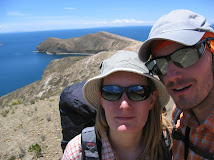
Esther: From the Peruvian side we visited the floating islands which are made from reed and fixed on the ground with spiles. It was bad to see that the whole wastewater from Puno with its over 100’000 inhabitants is lead unfiltered into the lake and that some of the families on the islands drink that water untreated. However, further away from the dirty lagoon the water is very nice and blue coloured. From Copacabana on the Bolivian side we visited Isla del Sol which is said to be the cradle of the Incas. The hike over the island was wonderful but also a bit annoying because each village asked for money to walk their rocky roads. Guards of two old men used to stand in the middle of the road and only let us pass after paying the toll.
Your trip took you further to Potosi via La Paz. Was there something special?
Marc: Through the Altiplano we reached El Alto, above La Paz, at an altitude of 4'000 meters above sea level. From there we had an impressive view over the city of La Paz which is built into the steep hills. The city was one big street market where you could buy everything at small street stalls. Impressive and at the same time frightening were the many demonstrations on the streets which we witnessed from very close. After visiting the economically well doing Cochabamba with its mild climate we travelled to Potosi. This city at about 4'000 meters was once the richest silver-mining city in the world. In its mines died over 8 million people (mainly indigenous and african slaves) for which it is called the American Holocaust and still today people are working the mines under very harsh conditions.
How did you spend Christmas?
Esther: We were in Sucre which is the offical capital of Bolivia. However, only the highest court is situated here, the president and the parliament are in La Paz. We spent the rainy days (for it was rainy season in Boliva) playing Backgammon, drinking fine red wine and chocolate truffles with spirit and we sang some Christmas songs in our hostel room. Furthermore we took walkes through the city with its white buildings and visited the theaters twice.
How are the theaters in Bolivia?
Marc: It was very unusual for us to learn from the notices that a movie was not played due to delivery problems - glad that it was not the movie of our joice. After the last sentence the visitors got off their seats and the movie was stopped abruptly, the end titles were not showed at all. Irritating was furthermore that the visitors took their little children (who of course got agitated after 30 minutes) into a 3 hours movie and that they picked up their cellphones during the performance.
Esther: Briefly said the visitors did everything to avoid being involed into the movie emotionally and bothered everyone else who wanted to enjoy the movie - maybe that was just the two of us. We have the theory that through the permanent consumption of (mostly bad and violent) movies in public buses and the ability to get every movie on the street for only 1 - 2 Dollars the people are oversaturated and not able or willing to involve themselves into a story.
How was the Jeep-Tour you did from Uyuni?
Esther: The tour was really a highlight of our trip. It took us over the huge salt lake of Uyuni passing amazing and changing landscapes to San Pedro de Atacama in the North of Chile where we celebrated New Year's Eve.
Marc: With a driver, a female cook and 4 other tourists we were on the road for 3 days. We slept in a salt hotel (where everything was built from salt), visited caves with fossil algies which were hanging from the ceiling, and with hiden graves, passed countless deserts (with rocks, with grass, with cactuses, from salt, lava, corals, white, light brown, dark brown, green, black, grey, with rain, without rain, in cold weather, in warm weather), visited white, green, red and blue lagoons, saw dead and active volcanos, hot springs and geysires, Vicunias (wild Lamas), Flamingos, desert foxes and wild ostriches.
Which where the culinary highlights of your trip?
Esther: Uncountable dishes. However, I especially miss the various soups and fruit juices which we particularly had in Ecuador and Peru and as well in Bolivia. Here in Patagonia it's summer time (although you wouldn't notice most of the time) and therefore the locals told us that it's not soup time. On the Jeep-Tour we had Lama Steaks and a Lama-Lasagne which was very delicious! In Valparaiso/Chile our meals were not very various because Marc turned himself into a Chilenan and ate at least one Completo (HotDog with tomatoes, guacamole and a loooot of mayonaise) each day. The single sided menu of the HotDog places didn't give me much of a choice either.
Marc: Therefor we compensated the missing nutrients in Bariloche/Argentina with Parilladas which are big pieces of meet from the grill acompained by salad and mashed potatos and with chocolate deserts in the tea houses. Furthermore the fresh Patagonian raspberrys and cherries tasted great and helped our health. And from Chile on we got decent bean coffee and therefore we don't greave for the old filter-scum we had to drink all the time before.
How do the plans for your last month on your trip look like?
Esther: Tomorrow we drive south to the famous glacier Perito Moreno which is one of the few that is stable or even growing. Then we go to Ushuaia in Tierra del Fuego which is the most Southern city in the world and starting point for the Antarctic expeditions. There we go looking for penguins (if they are not on an other mission to Madagaskar...). On 25th January we'll fly to Buenos Aires and besides a visit to the famous Iguazu Falls we'll spend the last days of our trip with Tango and sightseeing.
[Interview done by Esther & Marc]
Marc: Surrounded by mountains, lakes, rivers, glaciers and boulders – in El Chalten, the Trekking’s Mekka in the Argentinian Patagonia.
From Cusco you travelled to Lake Titicaca. What did you experience there?
Esther: From the Peruvian side we visited the floating islands which are made from reed and fixed on the ground with spiles. It was bad to see that the whole wastewater from Puno with its over 100’000 inhabitants is lead unfiltered into the lake and that some of the families on the islands drink that water untreated. However, further away from the dirty lagoon the water is very nice and blue coloured. From Copacabana on the Bolivian side we visited Isla del Sol which is said to be the cradle of the Incas. The hike over the island was wonderful but also a bit annoying because each village asked for money to walk their rocky roads. Guards of two old men used to stand in the middle of the road and only let us pass after paying the toll.
Your trip took you further to Potosi via La Paz. Was there something special?
Marc: Through the Altiplano we reached El Alto, above La Paz, at an altitude of 4'000 meters above sea level. From there we had an impressive view over the city of La Paz which is built into the steep hills. The city was one big street market where you could buy everything at small street stalls. Impressive and at the same time frightening were the many demonstrations on the streets which we witnessed from very close. After visiting the economically well doing Cochabamba with its mild climate we travelled to Potosi. This city at about 4'000 meters was once the richest silver-mining city in the world. In its mines died over 8 million people (mainly indigenous and african slaves) for which it is called the American Holocaust and still today people are working the mines under very harsh conditions.
How did you spend Christmas?
Esther: We were in Sucre which is the offical capital of Bolivia. However, only the highest court is situated here, the president and the parliament are in La Paz. We spent the rainy days (for it was rainy season in Boliva) playing Backgammon, drinking fine red wine and chocolate truffles with spirit and we sang some Christmas songs in our hostel room. Furthermore we took walkes through the city with its white buildings and visited the theaters twice.
How are the theaters in Bolivia?
Marc: It was very unusual for us to learn from the notices that a movie was not played due to delivery problems - glad that it was not the movie of our joice. After the last sentence the visitors got off their seats and the movie was stopped abruptly, the end titles were not showed at all. Irritating was furthermore that the visitors took their little children (who of course got agitated after 30 minutes) into a 3 hours movie and that they picked up their cellphones during the performance.
Esther: Briefly said the visitors did everything to avoid being involed into the movie emotionally and bothered everyone else who wanted to enjoy the movie - maybe that was just the two of us. We have the theory that through the permanent consumption of (mostly bad and violent) movies in public buses and the ability to get every movie on the street for only 1 - 2 Dollars the people are oversaturated and not able or willing to involve themselves into a story.
How was the Jeep-Tour you did from Uyuni?
Esther: The tour was really a highlight of our trip. It took us over the huge salt lake of Uyuni passing amazing and changing landscapes to San Pedro de Atacama in the North of Chile where we celebrated New Year's Eve.
Marc: With a driver, a female cook and 4 other tourists we were on the road for 3 days. We slept in a salt hotel (where everything was built from salt), visited caves with fossil algies which were hanging from the ceiling, and with hiden graves, passed countless deserts (with rocks, with grass, with cactuses, from salt, lava, corals, white, light brown, dark brown, green, black, grey, with rain, without rain, in cold weather, in warm weather), visited white, green, red and blue lagoons, saw dead and active volcanos, hot springs and geysires, Vicunias (wild Lamas), Flamingos, desert foxes and wild ostriches.
Which where the culinary highlights of your trip?
Esther: Uncountable dishes. However, I especially miss the various soups and fruit juices which we particularly had in Ecuador and Peru and as well in Bolivia. Here in Patagonia it's summer time (although you wouldn't notice most of the time) and therefore the locals told us that it's not soup time. On the Jeep-Tour we had Lama Steaks and a Lama-Lasagne which was very delicious! In Valparaiso/Chile our meals were not very various because Marc turned himself into a Chilenan and ate at least one Completo (HotDog with tomatoes, guacamole and a loooot of mayonaise) each day. The single sided menu of the HotDog places didn't give me much of a choice either.
Marc: Therefor we compensated the missing nutrients in Bariloche/Argentina with Parilladas which are big pieces of meet from the grill acompained by salad and mashed potatos and with chocolate deserts in the tea houses. Furthermore the fresh Patagonian raspberrys and cherries tasted great and helped our health. And from Chile on we got decent bean coffee and therefore we don't greave for the old filter-scum we had to drink all the time before.
How do the plans for your last month on your trip look like?
Esther: Tomorrow we drive south to the famous glacier Perito Moreno which is one of the few that is stable or even growing. Then we go to Ushuaia in Tierra del Fuego which is the most Southern city in the world and starting point for the Antarctic expeditions. There we go looking for penguins (if they are not on an other mission to Madagaskar...). On 25th January we'll fly to Buenos Aires and besides a visit to the famous Iguazu Falls we'll spend the last days of our trip with Tango and sightseeing.
[Interview done by Esther & Marc]
Samstag, 13. Dezember 2008
First English-Teacher found for Chugchilan!
Katharina, 27 years old, from Berlin is taking on the challenge from January 2009 to teach English to children, teachers and adults of Chugchilan. We are very happy to have found in her a competent, dedicated and courageous person to support the village on it’s way into the future. We thank Katharina already today for her engagement and we wish her all the best for her work in Chugchilan and many positive experiences!
We support Chugchilan also in the future and we will continue Katharina’s work beyond her return. Therefore, we found the association „Verein Pasos al Sur“ which is dedicated to assign Volunteers to Chugchilan and to support their work financially. People who would like to contribute to or/and financially support the association are welcome. Please let us know!
Are you interested in a Voluntary assignment? Then please let us know as well! Actually we are looking for IT-teachers (Computer basics) which will train the teachers of Chugchilan on how to use computers. Shortstays from about 1 month are possible.
For the beginning of the new semester in September 2009 we are looking for English and IT teachers which can take further Katharina’s work. The duration of the stay is at least 3 month whereas longer stays are prefered.
Esther Bayer & Marc Buergi
marc.buergi [at] gmx.ch
We support Chugchilan also in the future and we will continue Katharina’s work beyond her return. Therefore, we found the association „Verein Pasos al Sur“ which is dedicated to assign Volunteers to Chugchilan and to support their work financially. People who would like to contribute to or/and financially support the association are welcome. Please let us know!
Are you interested in a Voluntary assignment? Then please let us know as well! Actually we are looking for IT-teachers (Computer basics) which will train the teachers of Chugchilan on how to use computers. Shortstays from about 1 month are possible.
For the beginning of the new semester in September 2009 we are looking for English and IT teachers which can take further Katharina’s work. The duration of the stay is at least 3 month whereas longer stays are prefered.
Esther Bayer & Marc Buergi
marc.buergi [at] gmx.ch
Peru: from Mancora to Cusco (English)
Pictures 1: http://picasaweb.google.com/marc.buergi/Peru_Huacachina_Nasca#
Pictures 2: http://picasaweb.google.com/marc.buergi/Peru_Arequipa_CanyonDeColca#
For we both fell ill one after the other in Montañita our travels to Peru were delayed for about 10 days. After we got rid of all the bugs inside ourselves we took off for Guayaquil which is the economical capital at the coast of Ecuador in direction Peru. We visited the following places:
Mancora: Beach, Peru’s surfer mecca, new brands of bear and chocolate, getting used to the new currency the Peruvian Sole, cheap menus with seafood.
Lima: Backpacker Hostal in the beautiful and safe Miraflores, Marc ill in bed taken care off by Sister Esther, after 2 month finally self cooked spaghetti and fried potatoes, premium eggs with two yellow parts and the taste of fish (!), movie at the theaters and sushi at the Mall Larcomar with sea view over the cliffs, impressive pre-Inca pyramids where human sacrifices took place, Paco the Lama from the chewing gum commercial, Central Lima with a militaries’ parade along the president’s palace and the cathedral.
Huacachina: Oasis surrounded by sand dunes near Ica, sand sand sand as far as you can see, swimming pool and palm trees, exhausting ascend to the summit of the dunes which was rewarded with a wonderful view over the endless dunes at sunset, no sand buggy tour, no visit of the countless vine cellars, no sand boarding (for Marc was still too weak after the antibiotics treatment).
Nazca: Flight in a four place machine over the famous pictures and lines in the desert (Whale, Trapeze, Astronaut, Monkey, Dog, Spider, Colibri, Condor, Hand, Tree and many more), hair cut for Marc for about CHF 1.60, delicious breakfast after the flight, the most recent theater movies on DVD for about CHF 1.50.
Arequipa: wonderful buildings made from bright volcanic rock, visit of the monastry Santa Catalina which is a mysterious city by itself within the city, extensive walks through the city which is surrounded by high peaks and volcanoes, coffee and apple pie, at the main square every 5 meters restaurant employees who try to drag you into their tourist traps, Maroccan lamb stew (Tagine) as the culinary highlight, booking a 4-day trek on the Inca trail to Machu Picchu out of a thousand different price options.
Cañon de Colca: Bus ride over a high plateau with Vikuñas (wild living kind of Lama) and a pass crossing at about 4900 meters above sea level, Hostal Pachamama in Cabanaconde with wood-stove pizzas, pancakes for breakfast and competent tour hints, 1200 meters of descent into the Canyon to the Oasis and the same amount of meters again on the ascent after Spaghetti Napoli (Result: heavy legs and sore muscles), emergency rescue of an other tourist and bewaring him of falling deep into the canyon, the usual tourist tour for watching Condors at the watch point (got to see 4 birds, but quite far away), on the way back to Arequipa taking a hot bath in the springs of Chivay.
Cusco: Former capital of the Inca empire, Tourists’ Mecca of Peru, many churches and buildings settled on Inca walls, city in the shape of the puma, proper coffee (and not just instant shit) and jazz music at the Café dosX3, street vendors at every (!) corner of the city.
Pictures 2: http://picasaweb.google.com/marc.buergi/Peru_Arequipa_CanyonDeColca#
For we both fell ill one after the other in Montañita our travels to Peru were delayed for about 10 days. After we got rid of all the bugs inside ourselves we took off for Guayaquil which is the economical capital at the coast of Ecuador in direction Peru. We visited the following places:
Mancora: Beach, Peru’s surfer mecca, new brands of bear and chocolate, getting used to the new currency the Peruvian Sole, cheap menus with seafood.
Lima: Backpacker Hostal in the beautiful and safe Miraflores, Marc ill in bed taken care off by Sister Esther, after 2 month finally self cooked spaghetti and fried potatoes, premium eggs with two yellow parts and the taste of fish (!), movie at the theaters and sushi at the Mall Larcomar with sea view over the cliffs, impressive pre-Inca pyramids where human sacrifices took place, Paco the Lama from the chewing gum commercial, Central Lima with a militaries’ parade along the president’s palace and the cathedral.
Huacachina: Oasis surrounded by sand dunes near Ica, sand sand sand as far as you can see, swimming pool and palm trees, exhausting ascend to the summit of the dunes which was rewarded with a wonderful view over the endless dunes at sunset, no sand buggy tour, no visit of the countless vine cellars, no sand boarding (for Marc was still too weak after the antibiotics treatment).
Nazca: Flight in a four place machine over the famous pictures and lines in the desert (Whale, Trapeze, Astronaut, Monkey, Dog, Spider, Colibri, Condor, Hand, Tree and many more), hair cut for Marc for about CHF 1.60, delicious breakfast after the flight, the most recent theater movies on DVD for about CHF 1.50.
Arequipa: wonderful buildings made from bright volcanic rock, visit of the monastry Santa Catalina which is a mysterious city by itself within the city, extensive walks through the city which is surrounded by high peaks and volcanoes, coffee and apple pie, at the main square every 5 meters restaurant employees who try to drag you into their tourist traps, Maroccan lamb stew (Tagine) as the culinary highlight, booking a 4-day trek on the Inca trail to Machu Picchu out of a thousand different price options.
Cañon de Colca: Bus ride over a high plateau with Vikuñas (wild living kind of Lama) and a pass crossing at about 4900 meters above sea level, Hostal Pachamama in Cabanaconde with wood-stove pizzas, pancakes for breakfast and competent tour hints, 1200 meters of descent into the Canyon to the Oasis and the same amount of meters again on the ascent after Spaghetti Napoli (Result: heavy legs and sore muscles), emergency rescue of an other tourist and bewaring him of falling deep into the canyon, the usual tourist tour for watching Condors at the watch point (got to see 4 birds, but quite far away), on the way back to Arequipa taking a hot bath in the springs of Chivay.
Cusco: Former capital of the Inca empire, Tourists’ Mecca of Peru, many churches and buildings settled on Inca walls, city in the shape of the puma, proper coffee (and not just instant shit) and jazz music at the Café dosX3, street vendors at every (!) corner of the city.
Inka-Trail and Machu Picchu (English)
Pictures: http://picasaweb.google.com/marc.buergi/Peru_IncaTrail_MachuPichu#
At St.-Nicolas day we started our adventures trip very early in the morning and were taken by bus to km 82 of the railway road. Our group was formed by 10 tourists, the two guides Edwin and Gubel, a cook and 7 porters of which the oldest had 60 years of age. At km 82 we shouldered our backpacks with our personal stuff like clothes, sleeping bag and mattress and took off for the 4-day hike. The tents, table, chairs, food and cooking utensils were all carried up and down the hills by the cook and the porters. They did a tremendous job and most of them just with a pair of old sandals on their feet.
The first day was a training day. It took us along Inca ruins (of which one was built in the shape of a puma’s paw), cross ascents and descents and finally, after many stops, to our first campsite at about 3000 meters above sea level. From this place we had a stunning view over the valley and the cloudy mountains. Upon our arrival at the campsite the porters had already put up the tents and we were served popcorn and tee. All the 4 days they took care of us and served us with delicious and diversified food. They worked like ants all the time while we tourist were already exhausted by just carrying our own little bags.
The second day was the hardest. From our campsite the trail followed endless serpentines steadily up the hills until the first pass crossing at about 4200 meters above sea level. The last part was very steep and because of the altitude every step hurt. Finally after 3 hours we reached the highest point very exhausted and out of breath: Taking our pictures, enjoying the view and watching how the other tourists fight themselves up the hill. It proved again that a slow and steady walking rhythm was taking us faster to the top than the stop-and-go style (accompanied by chatting and commenting every tree along the way) of most of the other tourist. After a short break we descended on the other side on endless steps to our second campsite which was on about 3600 meters above sea level. Short after our arrival it started raining and the temperatures turned really cold. We were glad when finally our group was complete and we could have lunch which helped a lot on getting warm a bit.
The third day it was raining cats and dogs almost without a break. We were crossing two more passes (3900 and 3600 meters above sea level), passed several Inca ruins, walked through cloud forest with opulent vegetation and finally made our way down on very steep steps to the third campsite at 2600 meters above sea level. In this place the temperature was milder and for 5 Soles (CHF 1.60) you could get a warm shower. Although this was our last night and Gustavo from Brazil was calling for a party everybody vanished after dinner and a drink at the bar for their tents. The next morning we had to get up at 4.00 a.m. to be right in time for the opening of the gates for the last part of the Inca-Trail to reach Machu Picchu and to avoid the big masses of tourists there.
The next day everything had to go quick: get up, pack up, have breakfast and then run to the check point to be in the queue as close as possible to the gate to wait its opening. When the gate opened we took our legs under our armpits and made our way as fast as possible to the sun gate high above Machu Picchu. From there we could enjoy a very early 6 o’clock view at the ruins in the first light of the sun. It was a unique feeling to see the goal of our 4-day trip in front of us for the first time! After an intense photo session we took the last steps down to the ruins and finally visited them together with our guides who gave very interesting information. After we were stuffed with impressions and had honored the unique situation of Machu Picchu we made our way down to Aguas Calientes where we had our final party together with our hiking-team and then took the train and bus back to Cusco. Flavorsome smelling, happy and exhausted we finally got back to our hostal…
The first day was a training day. It took us along Inca ruins (of which one was built in the shape of a puma’s paw), cross ascents and descents and finally, after many stops, to our first campsite at about 3000 meters above sea level. From this place we had a stunning view over the valley and the cloudy mountains. Upon our arrival at the campsite the porters had already put up the tents and we were served popcorn and tee. All the 4 days they took care of us and served us with delicious and diversified food. They worked like ants all the time while we tourist were already exhausted by just carrying our own little bags.
The second day was the hardest. From our campsite the trail followed endless serpentines steadily up the hills until the first pass crossing at about 4200 meters above sea level. The last part was very steep and because of the altitude every step hurt. Finally after 3 hours we reached the highest point very exhausted and out of breath: Taking our pictures, enjoying the view and watching how the other tourists fight themselves up the hill. It proved again that a slow and steady walking rhythm was taking us faster to the top than the stop-and-go style (accompanied by chatting and commenting every tree along the way) of most of the other tourist. After a short break we descended on the other side on endless steps to our second campsite which was on about 3600 meters above sea level. Short after our arrival it started raining and the temperatures turned really cold. We were glad when finally our group was complete and we could have lunch which helped a lot on getting warm a bit.
The third day it was raining cats and dogs almost without a break. We were crossing two more passes (3900 and 3600 meters above sea level), passed several Inca ruins, walked through cloud forest with opulent vegetation and finally made our way down on very steep steps to the third campsite at 2600 meters above sea level. In this place the temperature was milder and for 5 Soles (CHF 1.60) you could get a warm shower. Although this was our last night and Gustavo from Brazil was calling for a party everybody vanished after dinner and a drink at the bar for their tents. The next morning we had to get up at 4.00 a.m. to be right in time for the opening of the gates for the last part of the Inca-Trail to reach Machu Picchu and to avoid the big masses of tourists there.
The next day everything had to go quick: get up, pack up, have breakfast and then run to the check point to be in the queue as close as possible to the gate to wait its opening. When the gate opened we took our legs under our armpits and made our way as fast as possible to the sun gate high above Machu Picchu. From there we could enjoy a very early 6 o’clock view at the ruins in the first light of the sun. It was a unique feeling to see the goal of our 4-day trip in front of us for the first time! After an intense photo session we took the last steps down to the ruins and finally visited them together with our guides who gave very interesting information. After we were stuffed with impressions and had honored the unique situation of Machu Picchu we made our way down to Aguas Calientes where we had our final party together with our hiking-team and then took the train and bus back to Cusco. Flavorsome smelling, happy and exhausted we finally got back to our hostal…
Montag, 3. November 2008
Banos - Riobamba - Cuenca – Montanita (English)
Pictures:
http://picasaweb.google.es/marc.buergi/BanosRiobambaChimborazoCuencaMontanita#
From Chugchilan we took a bus south to Banos. There we rented bikes and drove the street of the water falls
Our next destination was Riombamba where we got on the train to the famous Nariz del Diablo. But first we needed to be sportive again on the
The next day we had to get up at five o’clock in the morning, take a quick breakfast and catch the gringo train. This train is leaving three times a week just for tourists. People sit on the roof an only the luggage goes into the wagons. The trip to the Nariz del Diablo and back to Alausi takes about six hours. In between there are stops to move the hurting legs and to release the bladder. The railway is passing villages and crossing valleys until the high light - the Nariz - is reached. There the train is going forth and back down the tracks on the hill and later on forth and back up again. The trip was very nice although it was a bit long. Both of us were slightly disappointed by the Nariz for we thought of it as something a little more impressive. But for railway fans it may be something unique.
We climbed down from the roof, took another bus and headed off south to
Esther & Marc
Chugchilan in the Quilotoa Loop (English)
Pictures: http://picasaweb.google.es/marc.buergi/ChugchilanQuilotoa#
Since our last blog entry we made many new experiences. On the 14th October we took a bus from Latacunga to the
The first day we took a transport to the Laguna of Quilotoa which is placed in a crater of a volcano at about 4’000 meters above sea level. The view from the edge of the crater down onto the blue coloured lake is breath taking. After taking some shots with our cameras we headed off for the path along the edge of the crater. We had a five hours hike in front of us down to Chugchilan. For the road markers were all missing (but on the way everybody instantly asked if we would need a guide...) we had to find our own ways which resulted in making some extra ups and downs through the fields and along the crater. We did it the hard way and the hike was exhausting but very much worth the pain. We were pretty proud after we had made the endless seeming ascent from the bottom of the canyon up to Chugchilan in quite a sportive time. And that day we really earned our tasty dinner!
The second day we headed off by feet to explore the nearby cloud forest. After ascending for about an hour we reached the woods. We couldn’t find any clouds or fog but many orchids, a plenty green vegetation and a small river with water falls to discover. While we were making our way through the woods suddenly rain started to fall and the clouds/fog begun to rise. The trees and bushes seemed as they were being packed in cotton and now we could see why it was called a cloud forest. The very quick change was fascinating! We wouldn’t let us confuse by the fog and found our way easily back to the hostal passing some sheep and pigs along the road.
There we had Jose Luis telling us more about his village which is one of the poorest in the region. Jose Luis is a very interesting and easy going person and is full of ideas and energy. He is one of the few in the village with an university degree and one who is thinking a bit further than just until the next day. He told us about his plans on how to help the village to develop. As president of the parent’s board of the school he is looking for Volunteers as English and/or IT teachers for the school has there are seven Computers but nobody knows how to use them and for there is an English teacher which does hardly speak any English. Further he plans to better promote the products of the village to increase the villagers’ incomes. His plans very much touched our hearts and we agreed on helping him to achieve his goals. Our first task is therefore to find the necessary teachers for the village. If you are interested in such a position please read the job description in this blog or pass it on to someone who could be interested. What comes afterwards is not yet defined. But we are committed to a long term engagement in Chugchilan for we see and feel that the projects which are asked for are meaningful and can be realised and for with Jose Luis there is a person on the spot who takes care. We will keep you up to date.
Volunteer as Teacher in Ecuador
Volontariat als Lehrperson (Englisch und/oder Informatik) in
Chugchilán ist ein kleines Andendorf vier Busstunden von Latacunga entfernt. Es ist eines der aermsten Doerfer der Provinz
Fuer Unterkunft und Verpflegung ist gesorgt und die Lehrpersonen werden von der Familie Garzón herzlich aufgenommen. Ein Lohn kann nicht bezahlt werden. Die Stelle eignet sich fuer engagierte Personen, die das Landleben und einen einfachen Lebensstil schaetzen sowie Freude an der Natur haben.
Bewerbungen und Fragen an Marc Buergi und Esther Bayer (zurzeit unterwegs in Suedamerika):
Volunteer as Teacher (English and/or IT basics) in
Food and accommodation are provided and the teachers are warmly taken care of by the family Garzón. There cannot be paid any salary. The assignment is meant for committed people who like the country side including a simple life style and who love nature.
Applications and questions to Marc Buergi and Esther Bayer (travelling in
Se requiere algo de experiencia en enseñar y buen conocimiento del fundamento de la asignatura. Es posible mejorar el español durante la estancia. La duración minima del voluntariad es de 3 meses, sin embargo una estancia más larga sería apreciada.
Se dará hospedaje y alimentación y los profesores serán acogidos cordialmente por la familia Garzón. Un sueldo no será pagado. El puesto es para personas activas que aman la naturaleza, la vida en el campo y un estilo de vida sencillo.
marc.buergi (at) gmx.ch
Montag, 13. Oktober 2008
Quito – Machachi – Cotopaxi (English)
Photos: http://picasaweb.google.es/marc.buergi/QuitoMachachiCotopaxi#
We spent some more days in Quito, taking walks through the old city, watching a heartbreaking movie at the theatre which we really recommend (PS I love you) and relaxed in the hot thermes of Papallacta which is located in a volcanic crater two hours from Quito.
During our stay in Quito we used to meet Lucia, who is living and working there, several times. We also spent our last night in the capital together with her at a Swiss Restaurant having Fondue and Chilenian Sauvignon blanco – muchas gracias por su amistad, Lucia!
The last days we spent in the Hosteria Papagayo which is an ancient Hacienda (Farm) near the Cotopaxi National Park with a lot of animals (Horses, Lamas, Cows, Sheeps, Dogs and Chicken) and with a Jacuzzi. It was a wonderful fact that we could drink from the taps for the water was purified in the hole Hosteria.
Friday we went on a horseback ride. Esther who was riding a horse for the first time used to have a democratic leadership style. Horse and rider were allowed to chose pace and direction in swapping terms. Marc who was a bit more experienced with horses fully enjoyed the trip and galloped at the end of the trip to be first at the Hosteria. Afterwards we relaxed our muscles and especially the hurting backs in the Jacuzzi.
After a day of rest on Sunday we went to hike the Cotopaxi which is the highest activ volcano in Ecuador. With a minibus we drove up to 4’500 meters above sea level. From there we walked up to the Refugio at 4’800 meters and then further up to the beginning of the glacier at 5’000 meters above sea level. At this altitude every step is breathtaking but with small and steady steps we reached our destination of the day. While descending Marc was cruising down over snow, ash and boulders like on skiers. For Esther it took a little longer but when she reached the ash she got really fast as well.
Afterwards we were riding mountainbikes down the volcano. The very brave like Marc took the steep downhill ride to the Lago Limpopungo and the more relaxed drivers like Esther took over the bikes from thee and drove the more decent way towards the park exit.
Actually we are still sitting in the hostal, with our backpacks ready, waiting for the weather to turn from nasty to somewhat less nasty (for it is raining cats and dogs!). Our next goal is to reach Latacunga today and then to do the Quilotoa Loop to Chugchilan.
Esther & Marc
We spent some more days in Quito, taking walks through the old city, watching a heartbreaking movie at the theatre which we really recommend (PS I love you) and relaxed in the hot thermes of Papallacta which is located in a volcanic crater two hours from Quito.
During our stay in Quito we used to meet Lucia, who is living and working there, several times. We also spent our last night in the capital together with her at a Swiss Restaurant having Fondue and Chilenian Sauvignon blanco – muchas gracias por su amistad, Lucia!
The last days we spent in the Hosteria Papagayo which is an ancient Hacienda (Farm) near the Cotopaxi National Park with a lot of animals (Horses, Lamas, Cows, Sheeps, Dogs and Chicken) and with a Jacuzzi. It was a wonderful fact that we could drink from the taps for the water was purified in the hole Hosteria.
Friday we went on a horseback ride. Esther who was riding a horse for the first time used to have a democratic leadership style. Horse and rider were allowed to chose pace and direction in swapping terms. Marc who was a bit more experienced with horses fully enjoyed the trip and galloped at the end of the trip to be first at the Hosteria. Afterwards we relaxed our muscles and especially the hurting backs in the Jacuzzi.
After a day of rest on Sunday we went to hike the Cotopaxi which is the highest activ volcano in Ecuador. With a minibus we drove up to 4’500 meters above sea level. From there we walked up to the Refugio at 4’800 meters and then further up to the beginning of the glacier at 5’000 meters above sea level. At this altitude every step is breathtaking but with small and steady steps we reached our destination of the day. While descending Marc was cruising down over snow, ash and boulders like on skiers. For Esther it took a little longer but when she reached the ash she got really fast as well.
Afterwards we were riding mountainbikes down the volcano. The very brave like Marc took the steep downhill ride to the Lago Limpopungo and the more relaxed drivers like Esther took over the bikes from thee and drove the more decent way towards the park exit.
Actually we are still sitting in the hostal, with our backpacks ready, waiting for the weather to turn from nasty to somewhat less nasty (for it is raining cats and dogs!). Our next goal is to reach Latacunga today and then to do the Quilotoa Loop to Chugchilan.
Esther & Marc
Samstag, 11. Oktober 2008
!!! Robbery in the bus / Taschendiebe im Bus !!!
=> Deutscher Text unten
Warning: Robbery in the buses in Ecuador!!!
That ist how the pickpockets do (in our case try) it: There are three people of which one acts like a snackseller and two accomplices. Person Nr. 1 sits itself next to the tourists with a rucksack between their legs while the bus is still in the terminal. Person Nr. 2 sits itself in front of the victim and starts putting back its seat into the sleeping position. Then Person Nr. 3 shows up an pretends to "help" by trying to grab the rucksack with the words: Variation A; "Hand the rucksack for the lady in front can not putt her seat propperly in position..." and then Variaton B; "...it is just for your own comfort, that you have more space.". Then person Nr. 3 gets some candy bars out of its pocket pretending being a snackseller and leaves the bus. Soone after the accomplices leave the bus too... One is so much confused by these actions that one only realises later what just happened.
The rule is (like the chauffeur told us while entering the bus) : HOLD YOUR THINGS TIGHT! Luckely we were sticking to the rule and our backpack is still here...
Achtung Taschendiebe in Ecuadors Bussen!!!
So machen (bzw. versuchen) sie es die Diebe: Drei Personen, von denen eine als Snackverkaeufer getarnt ist und zwei Gehilfen. Person Nr. 1 setzt sich in den im Busterminal wartenden Bus gegenueber den Touristen mit einem Rucksack zwischen den Beinen. Person Nr. 2 setzt sich genau vor diese Touristen und beginnt den Sitz in die Schlafposition nach hinten zu bewegen. Person Nr. 3 versucht dann zu "helfen", indem sie sich den Rucksack schnappt mit den Worten: Variante A; "Geben sie den Rucksack ins Gepaeckfach, denn sonst kann die Dame den Sitz nicht nach hinten klappen..." und dann Variante B; ",...es ist viel bequemer fuer sie, wenn sie den Rucksack ins Gepaeckfach geben.". Danach zieht Person Nr. 3 ein paar Schokoriegel aus der Hosentasche und verlaesst getarnt als Snackverkaeufer den Bus. Die Gehilfen sind ploetzlich auch nicht mehr im Bus... Man ist bei dieser Aktion so abgelenkt, dass man erst viel spaeter realisiert, was gerade passiert ist.
Die Regel ist daher (wie uns der Buschauffeur noch gesagt hat): HALTE DEINE SACHEN FEST! Zum Glueck haben wir uns daran gehalten und der Rucksack ist noch da...
Warning: Robbery in the buses in Ecuador!!!
That ist how the pickpockets do (in our case try) it: There are three people of which one acts like a snackseller and two accomplices. Person Nr. 1 sits itself next to the tourists with a rucksack between their legs while the bus is still in the terminal. Person Nr. 2 sits itself in front of the victim and starts putting back its seat into the sleeping position. Then Person Nr. 3 shows up an pretends to "help" by trying to grab the rucksack with the words: Variation A; "Hand the rucksack for the lady in front can not putt her seat propperly in position..." and then Variaton B; "...it is just for your own comfort, that you have more space.". Then person Nr. 3 gets some candy bars out of its pocket pretending being a snackseller and leaves the bus. Soone after the accomplices leave the bus too... One is so much confused by these actions that one only realises later what just happened.
The rule is (like the chauffeur told us while entering the bus) : HOLD YOUR THINGS TIGHT! Luckely we were sticking to the rule and our backpack is still here...
Achtung Taschendiebe in Ecuadors Bussen!!!
So machen (bzw. versuchen) sie es die Diebe: Drei Personen, von denen eine als Snackverkaeufer getarnt ist und zwei Gehilfen. Person Nr. 1 setzt sich in den im Busterminal wartenden Bus gegenueber den Touristen mit einem Rucksack zwischen den Beinen. Person Nr. 2 setzt sich genau vor diese Touristen und beginnt den Sitz in die Schlafposition nach hinten zu bewegen. Person Nr. 3 versucht dann zu "helfen", indem sie sich den Rucksack schnappt mit den Worten: Variante A; "Geben sie den Rucksack ins Gepaeckfach, denn sonst kann die Dame den Sitz nicht nach hinten klappen..." und dann Variante B; ",...es ist viel bequemer fuer sie, wenn sie den Rucksack ins Gepaeckfach geben.". Danach zieht Person Nr. 3 ein paar Schokoriegel aus der Hosentasche und verlaesst getarnt als Snackverkaeufer den Bus. Die Gehilfen sind ploetzlich auch nicht mehr im Bus... Man ist bei dieser Aktion so abgelenkt, dass man erst viel spaeter realisiert, was gerade passiert ist.
Die Regel ist daher (wie uns der Buschauffeur noch gesagt hat): HALTE DEINE SACHEN FEST! Zum Glueck haben wir uns daran gehalten und der Rucksack ist noch da...
Dienstag, 7. Oktober 2008
Oriente / Jungle
Pictures from our Jungle trip:
http://picasaweb.google.es/marc.buergi/Ecuador_Oriente#
Esther taming the monkey:
http://www.youtube.com/watch?v=BpedPppU7dw
http://picasaweb.google.es/marc.buergi/Ecuador_Oriente#
Esther taming the monkey:
http://www.youtube.com/watch?v=BpedPppU7dw
After some days in Quito we took off to explore the amazing rain forest of Ecuador at the Cuyabeno Reserve which belongs to the Siona Community. We drove seven hours by bus to Lago Agrio - an oil city close to the Columbian boarder – from where we took antother bus two hours deeper into the jungle and eventually a dug out canoe for another two hours down the Cuyabeno River to the Samona Resort.
How to describe the jungle: wet, green, green and green whith a myriade of animals that creep and crawl arround and into every hole and crack. In the air a summing and a constant sound of birds, monkeys and cricks. And from times to times a loud cry by a tourist that stumbelt over something (!) in the bedroom – might be a Tarantula under the cussions, a Frog or a huge Coackroach in the shower or a snake chilling in the warm bed..
Together with our guide Gilver and the Spanish speaking group we went to explore the secrets of the jungle...
- uncountable plants and trees including old giant trees which were used by the tribes to communicate by hitting them to morse (the sound is really loud!),
- hallucinogen herbs which are used by the tribal shamans to connect with other spheres,
- Ants, small ones to rub onto the skin as mosquito repellent and others that live in symbiosis inside a tree with a citron taste which we eat alive (!) and poisonous big ones which we were fooling around with (posing very nice for the camera!),
- Termites that house a paracite inside which again houses a bacteria to transform wood into building material for giant nests. A wonderful symbiosis – a three in one solution – to creat „casas de mierda“ (houses made of shit),
- Hummingbirds (Kolibris) of which two babies in a nest are in the pictures,
- bloody poisonous red / brown frogs with a skin so toxic that an adult human would die within minutes after the secretion entered the bloodstream. Combined with the natural arrows from a special leave (see picture) its an effective hunting tool,
- Marching Wasps which are very much fun. How to do: Apporach their nest and make a loud noise e.g. you shout „March!“ and the wasps begin to rub their wings inside the nest to produce a loud (!) sound of a marching army to defend their nest. But one shouldn’t drive it too far for the next step of defense would be an attack...
- baby Boa (Snake) and a Cayman (small Crocodile) caught by Gilver at the night excursion to show us and to later release again into the wild,
- 7 of 10 kinds of monkeys living in the neighborhood eating and fooling arround in the trees,
- pink sweet water dolphines which were hard to find in the morning mists,- and many, many more..
- uncountable plants and trees including old giant trees which were used by the tribes to communicate by hitting them to morse (the sound is really loud!),
- hallucinogen herbs which are used by the tribal shamans to connect with other spheres,
- Ants, small ones to rub onto the skin as mosquito repellent and others that live in symbiosis inside a tree with a citron taste which we eat alive (!) and poisonous big ones which we were fooling around with (posing very nice for the camera!),
- Termites that house a paracite inside which again houses a bacteria to transform wood into building material for giant nests. A wonderful symbiosis – a three in one solution – to creat „casas de mierda“ (houses made of shit),
- Hummingbirds (Kolibris) of which two babies in a nest are in the pictures,
- bloody poisonous red / brown frogs with a skin so toxic that an adult human would die within minutes after the secretion entered the bloodstream. Combined with the natural arrows from a special leave (see picture) its an effective hunting tool,
- Marching Wasps which are very much fun. How to do: Apporach their nest and make a loud noise e.g. you shout „March!“ and the wasps begin to rub their wings inside the nest to produce a loud (!) sound of a marching army to defend their nest. But one shouldn’t drive it too far for the next step of defense would be an attack...
- baby Boa (Snake) and a Cayman (small Crocodile) caught by Gilver at the night excursion to show us and to later release again into the wild,
- 7 of 10 kinds of monkeys living in the neighborhood eating and fooling arround in the trees,
- pink sweet water dolphines which were hard to find in the morning mists,- and many, many more..
Gilver our guide knew so much about the jungle for he grew up here and still he mentioned that he learns something new every day and on every excursion. Other than on the Galapagos here it was allowed to touch things. One night Gilver carried out a big Tarantula from one of the guests room by hand! As a result the spider - for it not only bites - shot many of its poisonous hairs at him which causes an allergic reaction. But don’t worry he knew what he was doing an got rid of the toxic hairs after placing the (living!) spider on display for the guests in the cuboard of the bar..
Very sweet was the house monkey with the name Pancha which used to fool around the visitors acting like a three year old - we very much fell in love with her. See the YouTube video how she is trying to steal food from the table like she used to do all the times and it was very hard not to let her steal something occasionally..
One day we visited the Siona Community further down the river and we were welcomed by the eldest (92 years old!) shaman of the community. We went into the backyards to pick Cacao-Fruits, Oranges and Yuca (a root) which we then processed toYuca bread. Marc got really addicted to the Cacao-Fruit which is the very sweet part arround the ceed which back home we know as Cacao after it is dried and processed. While grinding and baking the Yuka bread the shaman told stories about maneater communities (yes, people eating other people!) he knew by personal experience. Later we practiced shooting with the blow gun but most of the time we didn’t hit neither animals nor humans..
That’s it so far. In the next days we take off to explore the Andes south of Quito down to Cuenca and then head for the beaches of Montanita to warm up a little bit. We are looking forward to your blog comments or E-Mails....
- Esther & Marc
Sonntag, 28. September 2008
Kleines Quiz oder Who is who of the Galapagos
In unserem Galapagos-Photoalbum (http://picasaweb.google.es/marc.buergi/EcuadorGalapagos#) wimmelt es nur so von Tieren, doch wer ist wer?
In our Galapagos-Pictures (http://picasaweb.google.es/marc.buergi/EcuadorGalapagos#) there are lots of animals, but who is who?
Seeloewe/Sea Lion - Galapagos-Pinguin - Blue Footed Booby - Red Footed Booby - Nasca oder/or Mask Booby - Land-Iguana - Marine-Iguana - Seeloewen-Baby/Sea Lion-Baby - Eidechse/Lizard - Krabbe/Crab - Pelikan - Mocking Bird - Swallow Tail Sea Gull - Lavahase/Lava-Rabbit - Frigate Bird - Baby-Booby - Albatros - Riesen-Schildkroete/Giant-Tortoise - Flamingo - Weissspitz-Riffhai/Whitetip Reefshark - Falke/Hawk
Aufloesung gibt’s keine, bei aeusserster Verzweiflung stehen wir jedoch gerne zur Verfuegung…
There is no solution available. If you are really desperate, contact us for help…
In our Galapagos-Pictures (http://picasaweb.google.es/marc.buergi/EcuadorGalapagos#) there are lots of animals, but who is who?
Seeloewe/Sea Lion - Galapagos-Pinguin - Blue Footed Booby - Red Footed Booby - Nasca oder/or Mask Booby - Land-Iguana - Marine-Iguana - Seeloewen-Baby/Sea Lion-Baby - Eidechse/Lizard - Krabbe/Crab - Pelikan - Mocking Bird - Swallow Tail Sea Gull - Lavahase/Lava-Rabbit - Frigate Bird - Baby-Booby - Albatros - Riesen-Schildkroete/Giant-Tortoise - Flamingo - Weissspitz-Riffhai/Whitetip Reefshark - Falke/Hawk
Aufloesung gibt’s keine, bei aeusserster Verzweiflung stehen wir jedoch gerne zur Verfuegung…
There is no solution available. If you are really desperate, contact us for help…
Samstag, 27. September 2008
Schedule of our Oriente Trip (Amazonas)
http://www.samona-expedition.com/jungle/jungle.htm (ITINERARY 5D / 4N) |
| 1.-Quito - Lago Agrio - El Puente . Flight 10:30 a.m. or bus journey (one day before - 8 hours) to Lago Agrio. Drive from Lago Agrio to el Puente. Canoe trip down on Cuyabeno river to our camp place .Exciting night walk. |
| 2.- Cuyabeno river. After Breakfast, trek into the primary rain forest learning about medicinal plants biological flora and fauna. After lunch, journey downstream to relax and enjoy the surrounding nature on tubes (water tubing). |
| 3.-Cuyabeno River. After breakfast we paddle by traditional dug-out canoe on the Caiman-cocha (Laguna del Caiman) where we will enjoy the nature uniqueness, lunch, hike in the primary forest including lessons in the use of plants for survival. Before we go back to our camp, we’ll have a relaxing time to swim and enjoy the sunset on the magnificent Laguna Grande. |
| 4.- Cuyabeno river. In the morning, walk to the Tarapuy Siona Community, our naturalist guide will explain about the culture and traditions of the native people, Piranha fishing in the afternoon Back to our camp. Night canoe trip in search of caimans ( alligators). |
| 5.- El Puente-Lago Agrio-Quito. Early morning bird watching. After breakfast journey up Cuyabeno river to El Puente. Drive back to Lago Agrio at 16:00. Flight or bus journey back to Quito. |
Freitag, 26. September 2008
Ecuador - Galapagos (English)
=> Deutscher Text unten
After a long time of talking about it, our trip finally started on the 3rd September 2008 at 8.10 p.m.. Our flight took us to Quito/Ecuador via Amsterdam, Bonaire and Guayaquil. After the tiring days of cleaning and arranging things back home we intended to have some relaxing days in Quito and to plan and arrange our next steps. It came completely different. As we ask for a trip to the Galapagos on Friday night the 5th September we were offered a last minute arrangement for a first class boat for the following Sunday for a really good price which we couldn't defeat. Everything was perfect and therefore we flew to Baltra on the Galapagos on Sunday the 7th September where we were picked up by our Ecuadorian guide Jorge. Together with the other passengers we were brought to the Marine Yacht Monserrat - our "hotel" for the next 8 days. We started our tour in Puerto Ayora on Santa Cruz. Our Schedule: Day 1: Highlands of Santa Cruz - Day 2: Santiago and Bartolome - Day 3: Genovesa - Day 4: Playa Las Bachas in the north of Santa Cruz and Seymour Norte - Day 5: Kickers Rock and San Cristobal - Day 6: Espanola - Day 7: Santa Fe and Plaza - Day 8: Charles Darwin Station on Santa Cruz.
The boat trip was just awesome! The islands which we visited were completely different from each other concerning their character, their flora as well as their fauna. Most impressive was the fact that the animals seemed to be fearless and that we could approach them very closely. The Galapagos are a National Park which can only be visited accompanied by an official guide with the exception of three islands. Our guide Jorge was a perfect role model for a respectful treatment of flora and fauna, gave an adequate quantity of information and was friendly, patient and of good humor at all time – even though he had to remind us one million times not to cross the National Park marks. Also our group of 16 passengers which varied a lot in age and origin was easy going and friendly. In the first half of our trip everybody was even patiently waiting for cabin number 5 with its VIP guests for the island and snorkeling excursions.
Our days started at about 7.00 a.m. and the schedule for the day was packed with different activities on the islands as well as on the water. Our spear hours were mostly spent with relaxing and sleeping. For the boat was navigating at night our sleep was not as comfortable all nights depending on the waves. Luckily we didn’t get sea sick but after some days on the boat we experienced the feeling of land sickness during our trips on the islands. Our Yacht the Monserrat was a very modern vessel with enough space and with a very friendly Ecuadorian crew. We felt very much at home from the first day. The meals varied and were of very good quality, only the quantity used to be a bit short from time to time. Therefore the first command was not to be last in the food queue/chain which we managed quite well.
Though everything comes to an end. Our boat trip ended on 14th September and we told our friends good bye – passengers, guide and crew. Only one friend remained – Saket from England – and the others flew back to mainland Ecuador. We stayed until the 19th September on the Galapagos. The first night we spent at Puerto Ayora in a very lively(!) place together with cockroaches, ants and other thingies we do not wish to know closer. The next day we moved to a very decent place called Hotel Espana where we got a clean room for the same price including two of the most friendly hotel managers in the world which made us feel at home at once! If you are in Puerto Ayora go to: www.elhotelespana.com. Marc went on scuba diving trips for two days (Floreana and Gordons Rock) where he was cruising along with White Tip Reef Sharks, Turtles, Sea Lions, many other creatures of the sea and finally just on the ascend of the last dive with a school of 20 to 30 Hammerhead Sharks - awesome! Meanwhile Esther spent two lazy days on Santa Cruz and visited the beaches of Tortuga Bay. Furthermore, we spent a very pleasant evening for dinner at the Swiss-Ecuadorian household of the Montalvo family – muchas gracias otra vez!
On Wednesday we took a two hours boat ride to the neighbor island Isabela. Isabela ist the biggest of the islands and one of the youngest for she is closest to the hot spot – the cradle of all the Galapagos islands. Because of the big waves and the small boat the ride was pretty rough an we were looking forward to doing the way back two days later. Thursday we hiked onto the Volcano Sierra Negra with its enormous crater with a diameter of about 10 km and its little brother Volcano Chico which was born 2005 – one still could feel hot(!) spots on the ground. We were very lucky for the fog cleared when we reached the top of the volcano and we were able to completely see its crater -our guide mentioned that this would be possible at only half of the days. In the afternoon we took a boat to a small island not far off the coast where we were able to see about 11 White Tip Reef Sharks lying in a channel. Especially for non-scuba-divers – like Esther – it was amazing to see them swimming into the channel and resting on the bottom. Marc afterwards went to visit the famous but very sad Wall of Tears where prisoners were tortured to death while building a useless wall of volcano rock.
On Friday the 19th September we took our final boat to Santa Cruz and our plane back to Quito. And that’s where we still are today. We are living the Chicago Hostel an we are taking our time to plan our next trips, to get to know the city and its people. At the same time we get used to our new intestinal guests as well as to the altitude of 2850 meters above sea level. Next Sunday we will leave for a week to the east into the region of the Amazon which here is called the Oriente. We are very much excited about the rain forest and we will let you know soon about our experiences!
The boat trip was just awesome! The islands which we visited were completely different from each other concerning their character, their flora as well as their fauna. Most impressive was the fact that the animals seemed to be fearless and that we could approach them very closely. The Galapagos are a National Park which can only be visited accompanied by an official guide with the exception of three islands. Our guide Jorge was a perfect role model for a respectful treatment of flora and fauna, gave an adequate quantity of information and was friendly, patient and of good humor at all time – even though he had to remind us one million times not to cross the National Park marks. Also our group of 16 passengers which varied a lot in age and origin was easy going and friendly. In the first half of our trip everybody was even patiently waiting for cabin number 5 with its VIP guests for the island and snorkeling excursions.
Our days started at about 7.00 a.m. and the schedule for the day was packed with different activities on the islands as well as on the water. Our spear hours were mostly spent with relaxing and sleeping. For the boat was navigating at night our sleep was not as comfortable all nights depending on the waves. Luckily we didn’t get sea sick but after some days on the boat we experienced the feeling of land sickness during our trips on the islands. Our Yacht the Monserrat was a very modern vessel with enough space and with a very friendly Ecuadorian crew. We felt very much at home from the first day. The meals varied and were of very good quality, only the quantity used to be a bit short from time to time. Therefore the first command was not to be last in the food queue/chain which we managed quite well.
Though everything comes to an end. Our boat trip ended on 14th September and we told our friends good bye – passengers, guide and crew. Only one friend remained – Saket from England – and the others flew back to mainland Ecuador. We stayed until the 19th September on the Galapagos. The first night we spent at Puerto Ayora in a very lively(!) place together with cockroaches, ants and other thingies we do not wish to know closer. The next day we moved to a very decent place called Hotel Espana where we got a clean room for the same price including two of the most friendly hotel managers in the world which made us feel at home at once! If you are in Puerto Ayora go to: www.elhotelespana.com. Marc went on scuba diving trips for two days (Floreana and Gordons Rock) where he was cruising along with White Tip Reef Sharks, Turtles, Sea Lions, many other creatures of the sea and finally just on the ascend of the last dive with a school of 20 to 30 Hammerhead Sharks - awesome! Meanwhile Esther spent two lazy days on Santa Cruz and visited the beaches of Tortuga Bay. Furthermore, we spent a very pleasant evening for dinner at the Swiss-Ecuadorian household of the Montalvo family – muchas gracias otra vez!
On Wednesday we took a two hours boat ride to the neighbor island Isabela. Isabela ist the biggest of the islands and one of the youngest for she is closest to the hot spot – the cradle of all the Galapagos islands. Because of the big waves and the small boat the ride was pretty rough an we were looking forward to doing the way back two days later. Thursday we hiked onto the Volcano Sierra Negra with its enormous crater with a diameter of about 10 km and its little brother Volcano Chico which was born 2005 – one still could feel hot(!) spots on the ground. We were very lucky for the fog cleared when we reached the top of the volcano and we were able to completely see its crater -our guide mentioned that this would be possible at only half of the days. In the afternoon we took a boat to a small island not far off the coast where we were able to see about 11 White Tip Reef Sharks lying in a channel. Especially for non-scuba-divers – like Esther – it was amazing to see them swimming into the channel and resting on the bottom. Marc afterwards went to visit the famous but very sad Wall of Tears where prisoners were tortured to death while building a useless wall of volcano rock.
On Friday the 19th September we took our final boat to Santa Cruz and our plane back to Quito. And that’s where we still are today. We are living the Chicago Hostel an we are taking our time to plan our next trips, to get to know the city and its people. At the same time we get used to our new intestinal guests as well as to the altitude of 2850 meters above sea level. Next Sunday we will leave for a week to the east into the region of the Amazon which here is called the Oriente. We are very much excited about the rain forest and we will let you know soon about our experiences!
Until then, please feel free to have look at our pictures from the Galapagos (and dance a little...).
http://picasaweb.google.es/marc.buergi/EcuadorGalapagos#
Sonntag, 21. September 2008
Vipassana Meditation in St-Imier/Schweiz
=> English version below
Anfangs August war ich fuer 10 Tage zur Vipassana-Meditation (wie schon in Indien) auf dem Mont-Soleil bei St-Imier/Schweiz. Einigen habe ich von meinen Erfahrungen erzaehlt und untenstehend sind die versprochenen Links zur Meditationstechnik und den Kurszentren.
Homepage Vipassana Meditation (nach S.N. Goenka/Sayagyi U Ba Khin): http://www.dhamma.org/
Homepage Dhamma Sumeru Vipassana-Zentrum Mont-Soleil, St-Imier/Schweiz: http://www.sumeru.dhamma.org/
Kursdaten des Dhamma Sumeru Vipassana-Zentrums:
http://www.dhamma.org/en/schedules/schsumeru.shtml
Ich empfehle allen Interessierten, sich einmal 10 Tage Zeit zu nehmen, um diese Technik kennen zu lernen. Mir hat sie tiefe Einsichten, Ruhe und Gelassenheit gebracht.
Moegen alle Wesen gluecklich sein!
- Marc
In August I sat a 10-days meditation course (like I did in India) on Mont-Soleil in St-Imier/Switzerland. I already told some of you about my experiences and you'll find the promissed links to the meditation technique and its centres below.
Homepage Vipassana Meditation (as by S.N. Goenka/Sayagyi U Ba Khin): http://www.dhamma.org/
Homepage Dhamma Sumeru Vipassana Centre Mont-Soleil, St-Imier/Switzerland: http://www.sumeru.dhamma.org/
Course Scedule of Dhamma Sumeru Vipassana Centre: http://www.dhamma.org/en/schedules/schsumeru.shtml
I suggest a 10 day course to everybody for it gives a good chance to get to know the technique and its benefits. Personally I gained deep insight, peace and equanimity.
May all beings be happy!
- Marc
Anfangs August war ich fuer 10 Tage zur Vipassana-Meditation (wie schon in Indien) auf dem Mont-Soleil bei St-Imier/Schweiz. Einigen habe ich von meinen Erfahrungen erzaehlt und untenstehend sind die versprochenen Links zur Meditationstechnik und den Kurszentren.
Homepage Vipassana Meditation (nach S.N. Goenka/Sayagyi U Ba Khin): http://www.dhamma.org/
Homepage Dhamma Sumeru Vipassana-Zentrum Mont-Soleil, St-Imier/Schweiz: http://www.sumeru.dhamma.org/
Kursdaten des Dhamma Sumeru Vipassana-Zentrums:
http://www.dhamma.org/en/schedules/schsumeru.shtml
Ich empfehle allen Interessierten, sich einmal 10 Tage Zeit zu nehmen, um diese Technik kennen zu lernen. Mir hat sie tiefe Einsichten, Ruhe und Gelassenheit gebracht.
Moegen alle Wesen gluecklich sein!
- Marc
In August I sat a 10-days meditation course (like I did in India) on Mont-Soleil in St-Imier/Switzerland. I already told some of you about my experiences and you'll find the promissed links to the meditation technique and its centres below.
Homepage Vipassana Meditation (as by S.N. Goenka/Sayagyi U Ba Khin): http://www.dhamma.org/
Homepage Dhamma Sumeru Vipassana Centre Mont-Soleil, St-Imier/Switzerland: http://www.sumeru.dhamma.org/
Course Scedule of Dhamma Sumeru Vipassana Centre: http://www.dhamma.org/en/schedules/schsumeru.shtml
I suggest a 10 day course to everybody for it gives a good chance to get to know the technique and its benefits. Personally I gained deep insight, peace and equanimity.
May all beings be happy!
- Marc
Abonnieren
Posts (Atom)

 Posts
Posts


